Jueces 6

VBL · Chapter 6/21

1Pero los israelitas hicieron lo que era malo a los ojos del Señor. Así que el Señor los entregó a los madianitas durante siete años.

2La opresión madianita era tan grande que, a causa de ellos, los israelitas se hicieron de escondites en montañas, cuevas y fortificaciones.

3Cada vez que los israelitas sembraban sus cosechas, los madianitas, amalecitas y otros pueblos del este venían a atacarlos.

4Instalaban sus campamentos y destruían las cosechas del país hasta Gaza. No dejaban nada para comer en todo Israel, y tomaban para sí todas las ovejas, el ganado y los asnos.

5Llegaron en gran número con su ganado y sus tiendas como enjambres de langostas, con tantos camellos que no se podían contar. Invadieron la tierra para devastarla por completo.

6Los israelitas se vieron desesperadamente empobrecidos por los madianitas y pidieron ayuda al Señor.

7Cuando los israelitas clamaron al Señor por ayuda a causa de los madianitas,

8el Señor envió a los israelitas un profeta. Éste les dijo: “Esto es lo que dice el Señor, el Dios de Israel: ‘Yo os saqué de Egipto; yo os saqué del lugar donde erais esclavos.

9Los salvé del poder de los egipcios y de todos los que os oprimían. Los expulsé delante de ustedes y les di su tierra.

10Yo te advertí: Yo soy el Señor, tu Dios. No debes adorar a los dioses de los amorreos, en cuya tierra vives ahora’. Pero no me escuchaste”.

11El ángel del Señor vino y se sentó bajo la encina de Ofra que pertenecía a Joás el abiezerita. Su hijo Gedeón estaba trillando allí el trigo en un lagar para ocultarlo de los madianitas.

12El ángel del Señor se le apareció y le dijo: “¡El Señor está contigo, gran hombre valiente!”

13“Perdona, mi señor, pero si el Señor está con nosotros, ¿por qué nos ha pasado todo esto?” respondió Gedeón. “¿Dónde están todos sus maravillosos milagros que nos recordaban nuestros antepasados cuando decían: ‘¿No fue el Señor quien nos sacó de Egipto?’. Pero ahora el Señor nos ha abandonado y nos ha entregado a los madianitas”.

14El Señor se dirigió a él y le dijo: “Ve con la fuerza que tienes y salva a Israel de los madianitas. ¿No soy yo quien te envía?”

15“Perdona, mi señor, pero ¿cómo puedo salvar a Israel?” respondió Gedeón. “¡Mi familia es la menos importante de la tribu de Manasés, y yo soy la persona menos importante de esa familia!”.

16“Yo estaré contigo”, le dijo el Señor. “Derrotarás a los madianitas como si fueran un solo hombre”.

17“Por favor, Señor, si piensas bien de mí, dame una señal de que realmente eres tú quien me dice esto”, pidió Gedeón.

18“No te vayas hasta que regrese y te presente mi ofrenda”.

19Gedeón fue y cocinó un cabrito y coció panes sin levadura con un efa de harina. Puso la carne en una cesta y el caldo en una olla. Los sacó y se los presentó al ángel bajo la encina.

20El ángel de Dios le dijo: “Coloca la carne y los panes sin levadura sobre esta roca y vierte el caldo sobre ellos”. Así lo hizo Gedeón.

21El ángel del Señor extendió el báculo que tenía en la mano y tocó la carne y los panes ácimos con la punta. De la roca salió fuego y quemó la carne y los panes sin levadura. Luego el ángel desapareció.

22Cuando Gedeón se dio cuenta de que era el ángel del Señor, gritó: “¡Oh, no, Señor Dios! He visto al ángel del Señor cara a cara”

23Pero el Señor le dijo: “¡Paz! No te preocupes, no vas a morir”.

24Así que Gedeón construyó allí un altar al Señor y lo llamó “El Señor es la Paz”. Todavía hoy está allí, en Ofra de los abiezritas.

25Esa noche, el Señor le dijo a Gedeón: “Toma el toro de tu padre y un segundo toro de siete años, y derriba el altar de Baal de tu padre, y corta el poste de Asera que está al lado.

26Luego construye un altar al Señor, tu Dios, en la forma debida, en la cima de la colina. Con la madera del poste de Asera que cortaste como leña, toma el segundo toro y preséntalo como holocausto”.

27Gedeón, acompañado por diez de sus siervos, hizo lo que el Señor le había dicho. Sin embargo, como tenía miedo de su familia y de el pueblo del pueblo, lo hizo durante la noche y no de día.

28Por la mañana, cuando el pueblo del pueblo se levantó, vio que el altar de Baal había sido derribado y el poste de Asera que estaba a su lado había sido cortado, y que el segundo toro había sido sacrificado en el altar que acababa de ser construido.

29Se preguntaron unos a otros: “¿Quién ha hecho esto?” . Enetonces indagaron hasta que les dijeron: “Lo hizo Gedeón, hijo de Joás”.

30“Entrega a tu hijo”, le ordenó el pueblo del pueblo a Joás. “Debe morir, porque ha derribado el altar de Baal y ha cortado el poste de Asera que estaba junto a él”.

31Joás respondió a todos los que se enfrentaban a él: “¿Acaso están peleando a favor de Baal? ¿Tienen que salvarlo? Cualquiera que pelee a favor de él será condenado a muerte por la mañana. Si es un dios, que luche por sí mismo contra los que derribaron su altar”.

32Aquel día llamaron a Gedeón Jerub-baal, que significa “Que Baal luche con él”, porque había derribado su altar.

33Todos los madianitas, amalecitas y otros pueblos del Oriente se reunieron y cruzaron el Jordán. Acamparon en el valle de Jezreel.

34El Espíritu del Señor vino sobre Gedeón, y tocó la trompeta, llamando a los del clan de Abiezer para que se les unieran.

35Envió mensajeros por todo el territorio de Manasés, llamándolos para que se unieran a él, y también a Aser, Zabulón y Neftalí, para que también vinieran y se unieran a los demás.

36Gedeón dijo a Dios: “Si salvas a Israel por medio de mí, como lo prometiste,

37entonces mira: pondré un vellón de lana en la era. Si el vellón está mojado por el rocío pero la tierra está seca, entonces sabré que vas a salvar a Israel a través de mí como lo prometiste”.

38Eso fue lo que ocurrió. Cuando Gedeón se levantó temprano a la mañana siguiente, presionó el vellón y exprimió el rocío, suficiente agua para llenar un tazón.

39Entonces Gedeón le dijo a Dios: “Por favor, no te enfades conmigo. Sólo déjame hacer una petición más. Déjame hacer una prueba más con el vellón. Esta vez deja que el vellón esté seco y que toda la tierra se cubra de rocío”.

40Esa noche Dios hizo exactamente eso. Sólo el vellón se secó y toda la tierra se cubrió de rocío.

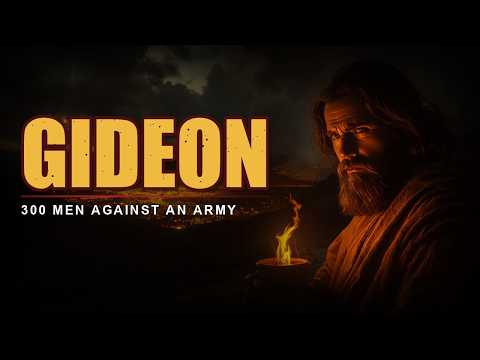
📖 Chapter study

Summary

Israel suffers under the Midianites. An angel calls Gideon, a fearful farmer, to deliver the people. Gideon asks for signs — the fleece that is wet, then dry — before acting.

Explanation

Gideon is introduced threshing wheat hidden in a winepress, afraid of the Midianites who stripped the harvests like locusts — a vivid image of extreme economic oppression. His response to the angel's call is one of honest doubt ('if the Lord is with us, why then has all this happened to us?'), and God does not rebuke him for asking, but confirms his calling with concrete signs, such as the fire that consumes the offering and the test of the wool fleece. Tearing down his own father's altar to Baal, done at night out of fear, shows that even leaders God uses begin with real weaknesses — courage grows over the course of the process, it is not a perfect prerequisite from the start.

Fun facts

  • The name 'Jerubbaal' given to Gideon (meaning 'let Baal contend') was an ironic nickname given by the townspeople themselves, turning a pagan threat into a testimony to the false god's powerlessness.
  • The test of the wool fleece (dew only on the fleece, then dry only on the fleece) demonstrated control over opposite physical conditions in rapid succession, making it impossible to attribute the result to weather coincidence.

Verse-by-verse explanation

  1. Jueces 6:1Israel again does what is evil in the sight of the Lord, and this time God hands the people over to the Midianites for seven years, restarting the cycle already seen in earlier chapters.
  2. Jueces 6:2The Midianites gain such dominance that the Israelites take to living hidden in mountain dens, caves, and rock strongholds, afraid to stay out in the open.
  3. Jueces 6:3Every time Israel planted, the Midianites, Amalekites, and other peoples of the east would come up to attack as soon as the harvest began.
  4. Jueces 6:4These invaders would camp against Israel and destroy the produce of the land all the way to Gaza, leaving the people no food, sheep, ox, or donkey.
  5. Jueces 6:5They would come with their livestock and tents, a multitude as thick as locusts, impossible to count, coming only to ravage the land of Israel.
  6. Jueces 6:6Israel is reduced to poverty because of the Midianites, and it is this distress that finally drives the people to cry out to the Lord.
  7. Jueces 6:7The text repeats that it was this cry over the Midianites that reached God, setting up the response that follows.
  8. Jueces 6:8God sends a prophet to remind Israel that it was He who brought them up out of Egypt, out of the house of bondage, long before anything to do with the Midianites.
  9. Jueces 6:9The prophet continues: God delivered them from the Egyptians and from every oppressor, drove out the peoples of the land, and gave that land to Israel.
  10. Jueces 6:10God had warned them not to fear the gods of the Amorites in the land where they now lived, but the people did not obey His voice. It is the same accusation already made by the angel back in chapter 2.
  11. Jueces 6:11The angel of the Lord sits down under an oak in Ophrah, and finds Gideon threshing wheat hidden inside a winepress, a low, enclosed spot, just so the Midianites will not see and steal the grain.
  12. Jueces 6:12The angel appears to Gideon and greets him as a mighty man of valor, a greeting that sounds ironic for someone hiding for fear of the enemy.
  13. Jueces 6:13Gideon answers with a question full of doubt: if the Lord is with them, why so much suffering, and where are the wonders their fathers used to tell about, from the exodus out of Egypt?
  14. Jueces 6:14The Lord looks at Gideon and sends him to go in this his might to deliver Israel from the Midianites, making clear that it is He Himself who is sending Gideon on this mission.
  15. Jueces 6:15Gideon answers the call by saying his family is the poorest in Manasseh and that he is the least in his father’s house. This is not false modesty; it is the same hesitation found in other biblical callings, such as Moses’, when an ordinary person is summoned to a task far too big for him.
  16. Jueces 6:16God promises to be with Gideon, assuring him that he will strike down the Midianites as though they were a single man, despite everything Gideon had just said about his own weakness.
  17. Jueces 6:17Gideon asks for a sign to confirm that it is really the Lord speaking with him, before accepting so great a mission.
  18. Jueces 6:18Gideon asks his visitor to wait there until he comes back with an offering, and the angel agrees to wait.
  19. Jueces 6:19Gideon prepares a young goat and unleavened bread, puts the meat in a basket and the broth in a pot, and brings it all out under the oak to offer to the angel.
  20. Jueces 6:20The angel tells Gideon to lay the meat and the bread on a rock and pour out the broth over them, which he does without yet understanding what is about to happen.
  21. Jueces 6:21The angel touches the offering with the tip of his own staff, and fire comes up out of the rock and consumes everything instantly; after that, the angel vanishes from Gideon’s sight.
  22. Jueces 6:22Only at this point does Gideon realize he has been speaking with the angel of the Lord, and he is terrified, thinking that seeing an angel face to face might mean death.
  23. Jueces 6:23The Lord reassures Gideon, telling him that he has peace and will not die, despite this direct encounter with the angel.
  24. Jueces 6:24Gideon builds an altar there to the Lord and calls it Jehovah-shalom, meaning “the Lord is peace,” an altar that, according to the text, still stood in Ophrah at the time the book was written.
  25. Jueces 6:25That same night, God tells Gideon to take his father’s bull and tear down the altar of Baal that belonged to Joash, and also to cut down the sacred pole standing beside it.
  26. Jueces 6:26God also tells Gideon to build a proper altar to the Lord on that same spot, and to offer the bull as a burnt offering using the wood of the pole he is to cut down.
  27. Jueces 6:27Gideon tears down his father’s altar of Baal at night, afraid of the city’s reaction. The text does not hide this fear, which makes the act seem more human than heroic right from the start.
  28. Jueces 6:28In the morning, the men of the city find the altar of Baal torn down, the sacred pole cut down, and the bull already offered on the new altar, everything done before they woke up.
  29. Jueces 6:29The townspeople ask one another who did this, investigate, and discover that it was Gideon, the son of Joash.
  30. Jueces 6:30The men of the city demand that Joash hand over his own son to be put to death, because of his boldness in tearing down the altar of Baal.
  31. Jueces 6:31Joash defends his son by asking whether they themselves intend to plead Baal’s cause; he argues that if Baal is really a god, let him contend for himself against the one who tore down his altar.
  32. Jueces 6:32Because of this, on that day Gideon is given the name Jerubbaal, meaning “Let Baal plead against him,” a direct reference to what Joash had said.
  33. Jueces 6:33The Midianites, Amalekites, and the peoples of the east join together into a single army and camp in the valley of Jezreel, ready for yet another invasion.
  34. Jueces 6:34The Spirit of the Lord comes upon Gideon, and he blows a trumpet to summon the men of his own family to follow him into battle.
  35. Jueces 6:35Gideon sends messengers to the tribes of Manasseh, Asher, Zebulun, and Naphtali, and all of them come out to join him.
  36. Jueces 6:36Gideon asks God for confirmation before acting: he wants to be certain that it is truly by his hand that Israel will be delivered.
  37. Jueces 6:37The test with the fleece of wool is not a lack of faith; it is a request for concrete confirmation before leading others into war. Gideon repeats the test in reverse the next day, as if trying to rule out any natural explanation for the phenomenon.
  38. Jueces 6:38The next morning, exactly as Gideon had asked, the fleece is so soaked with dew that he wrings out of it a bowlful of water, while the ground all around stays dry.
  39. Jueces 6:39Gideon apologizes for pressing further and makes a second request: this time, that the fleece stay dry while only the ground around it is wet with dew, to rule out any natural explanation.
  40. Jueces 6:40God grants this second request as well: that night only the fleece stays dry, while all the ground around it is covered with dew by morning.

Watch the story of this passage

Videos from our channel that tell what happens in Judges 6.

Chapters

Our apps

Our apps →

Bible in Stories

The Bible told as a story, with audio and videos.

📱 Get the app

World in Stories

True stories of humanity that sound made up.

Feito! Pequenas Vitórias

A light daily routine for people who lose track of the day.