Ester 2

VBL · Chapter 2/10

1Más tarde, después de todo lo ocurrido, la ira del rey Jerjes se calmó y pensó en Vasti y en lo que había hecho, y en el decreto emitido contra ella.

2Sus consejeros le sugirieron, “¿Por qué no ordenar una búsqueda para encontrar hermosas jóvenes vírgenes para Su Majestad?

3Su Majestad debería poner oficiales a cargo en cada provincia de su imperio para reunir a todas las jóvenes hermosas y llevarlas al harén del rey en la fortaleza de Susa. Que las pongan bajo la supervisión de Hegai, el eunuco del rey encargado de las mujeres, y que les hagan tratamientos de belleza.

4La joven que el rey encuentre más atractiva puede convertirse en reina en lugar de Vasti”. Al rey le pareció una buena idea y la puso en práctica.

5En la fortaleza de Susa vivía un judío llamado Mardoqueo, hijo de Jair, hijo de Simei, hijo de Cis, un benjamita

6que estaba entre los que fueron tomados como prisioneros con el rey Joaquín de Judá y llevados al exilio desde Jerusalén por el rey Nabucodonosor de Babilonia.

7Él había criado a Hadasa (o Ester), la hija de su tío, porque ella no tenía padre ni madre. La joven tenía una hermosa figura y era muy atractiva. Después de la muerte de su padre y de su madre, Mardoqueo la había adoptado como su propia hija.

8Cuando se anunció la orden y el decreto del rey, muchas jóvenes fueron llevadas a la fortaleza de Susa bajo la supervisión de Hegai. Ester también fue llevada al palacio del rey y puesta bajo el cuidado de Hegai, quien estaba a cargo de las mujeres.

9Ester llamó su atención y la trató favorablemente. Rápidamente le preparó tratamientos de belleza y comida especial. También le proporcionó siete sirvientas especialmente elegidas del palacio del rey, y la trasladó a ella y a sus sirvientas al mejor lugar del harén.

10Ester no había dejado que nadie supiera su nacionalidad o quién era su familia, porque Mardoqueo le había ordenado que no lo hiciera.

11Todos los días Mardoqueo se paseaba frente al patio del harén para saber cómo estaba Ester y qué le ocurría.

12Antes de que le llegara el turno a la joven de ir a ver al rey Jerjes, tenía que cumplir doce meses de tratamientos de belleza para mujeres que eran obligatorios: seis meses con aceite de mirra y seis con aceites y ungüentos perfumados.

13Cuando llegaba el momento de que la joven fuera a ver al rey, se le daba lo que ella pidiera para ir del harén al palacio del rey.

14Al anochecer iba, y por la mañana volvía a otro harén bajo la supervisión de Saasgaz, que era el eunuco del rey encargado de las concubinas. No volvería a estar con el rey a menos que éste se sintiera especialmente atraído por ella y la llamara por su nombre.

15(Ester era hija de Abihail, tío de Mardoqueo. Mardoqueo la había adoptado como su propia hija). Cuando le tocó a Ester ir a ver al rey, no pidió nada para llevar, excepto lo que le aconsejó Hegai. (Él era el eunuco del rey encargado de las mujeres). Y Ester fue vista con admiración por todos.

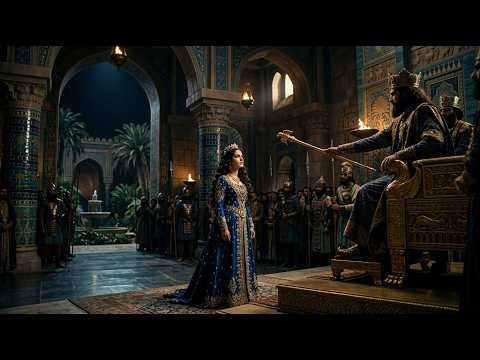
16Entonces Ester fue llevada ante el rey Jerjes a su palacio real, en el décimo mes, el mes de Tebet, en el séptimo año de su reinado.

17El rey amó a Ester más que a todas las demás mujeres. La trató más favorablemente y con mayor bondad que a todas las demás vírgenes. Así que colocó la corona real sobre su cabeza y la nombró reina en lugar de Vasti.

18Entonces el rey dio un gran banquete a todos sus funcionarios y administradores: el banquete de Ester. También lo declaró festivo en todas las provincias y repartió generosos regalos.

19Aunque hubo una segunda reunión de vírgenes, y Mardoqueo había recibido un puesto del rey,

20Ester seguía sin dejar que nadie supiera de su familia o de su nacionalidad, como le había ordenado Mardoqueo. Siguió las instrucciones de Mardoqueo tal como lo hizo cuando la educó.

21En ese momento, mientras Mardoqueo hacía su trabajo en la puerta del palacio, Bigtán y Teres, dos eunucos que custodiaban la entrada a las habitaciones del rey, se enfurecieron con el rey Jerjes y buscaron la manera de asesinarlo.

22Mardoqueo se enteró del complot y se lo comunicó a la reina Ester. Ester, a su vez, se lo comunicó al rey en nombre de Mardoqueo.

23Cuando se investigó el complot y se comprobó que era cierto, ambos fueron empalados en postes. Esto fue registrado en el libro oficial de registros por orden del rey.
📖 Chapter study

Summary

After Vashti's removal, a search is organized throughout the empire to find a new queen among the most beautiful young women. Esther, a young Jewish orphan raised by her cousin Mordecai, is chosen and becomes queen without revealing her Jewish background.

Explanation

Esther enters the palace through a process that would be seen today as deeply troubling—young women forcibly brought into a beauty contest that, in practice, ended with a single night with the king, with no choice of their own. It's important to read this chapter while acknowledging the harsh reality faced by women in ancient empires, without romanticizing the situation. Even so, within these difficult circumstances, Esther finds favor with those around her and, on Mordecai's advice, keeps her identity secret—a secret that will become crucial later on. The chapter also plants an important seed: Mordecai uncovers a plot against the king and reports it, an act of loyalty that will be remembered much later.

Fun facts

  • The name Esther likely comes from the Persian goddess Ishtar, while her Hebrew name, Hadassah, means 'myrtle,' an aromatic plant—a detail that shows how she lived with two identities, one public and one hidden.
  • The preparation process for the candidates lasted a full twelve months, with six months of treatment with oil of myrrh and another six with perfumes, revealing the extreme luxury and ritual of the Persian court.

Verse-by-verse explanation

  1. Ester 2:1Some time later, the anger of the moment having faded, the king seems to miss Vashti, but the decree he himself had signed could no longer be undone.
  2. Ester 2:2The king’s own advisers suggest a practical solution: organize a search for beautiful young women throughout the empire to choose a new queen.
  3. Ester 2:3Officers are sent throughout the empire to gather young virgins at the fortress of Shushan, under the care of a eunuch in charge of the king’s harem. It is through this official roundup of young women that Esther arrives at the palace, without having chosen it herself.
  4. Ester 2:4The king accepts the proposal without hesitation, starting a selection process that will, unnoticed by anyone yet, bring a young Jewish woman into the palace.
  5. Ester 2:5Mordecai is introduced with a genealogy tracing back to the tribe of Benjamin, the same tribe as King Saul, a detail that gains weight later, since the enemy Haman is described as an Agagite, linked to the people of Amalek, an ancient rival of the Benjamites.
  6. Ester 2:6Mordecai, or at least his family, had been carried into exile decades earlier, together with Jeconiah king of Judah, the same Babylonian exile background that already appears in Ezra and Nehemiah.
  7. Ester 2:7Esther is orphaned of both father and mother and was raised by her cousin Mordecai, who adopted her as his own daughter. The text makes this bond of kinship and care clear before explaining how she ends up among the candidates for queen.
  8. Ester 2:8Esther is brought to the palace as part of a mass official summons, with no choice of her own in the process; she is simply one of the many young women gathered by royal order.
  9. Ester 2:9Hegai, in charge of the harem, shows favor toward Esther from the start, giving her special treatment and seven maidens just for her.
  10. Ester 2:10By Mordecai’s order, Esther hides her Jewish identity inside the palace, a secret that will become crucial later in the story.
  11. Ester 2:11Even without being able to speak to her directly, Mordecai checks on Esther every day, showing how much he kept caring for her even from a distance.
  12. Ester 2:12Before any young woman could appear before the king, she went through twelve months of preparation, six with oil of myrrh and six with other spices, a long beautification process carefully regulated by the royal household.
  13. Ester 2:13Each young woman could choose whatever she wanted to take with her on the night she was presented to the king, a detail that makes Esther’s simple choice in the next verse even more striking.
  14. Ester 2:14After a single night, each young woman went to a second part of the harem, reserved for concubines, and would only see the king again if he specifically asked for her by name.
  15. Ester 2:15Unlike the other young women, Esther asks for nothing beyond what Hegai suggests, a simplicity that seems to have won over both the eunuch and, shortly after, the king himself.
  16. Ester 2:16Esther is finally brought before the king four years after the banquet that had dethroned Vashti, a selection process that took a long time.
  17. Ester 2:17Among all the candidates gathered over the years, it is Esther who wins the king’s heart and receives the crown, becoming the new queen of Persia.
  18. Ester 2:18The king celebrates Esther’s coronation with a great feast and even grants some kind of relief from taxes or military service to the provinces, a gesture of generosity in honor of the new queen.
  19. Ester 2:19Mordecai already holds a fixed position as an official at the king’s gate, which will give him access to important information in the very next verse.
  20. Ester 2:20Even as queen now, Esther keeps hiding her Jewish origin, obeying Mordecai just as she had done since childhood.
  21. Ester 2:21Two of the king’s own chamberlains plot to assassinate the king, and it is precisely because of Mordecai’s position at the gate that he discovers the conspiracy.
  22. Ester 2:22Mordecai discovers a conspiracy by two eunuchs against the king’s life and tells Esther, who in turn tells the king himself, giving Mordecai the credit. This warning, recorded in the chronicles of the kingdom, will become centrally important much later in the plot.
  23. Ester 2:23The two conspirators are executed, and Mordecai’s warning is officially recorded in the chronicles of the kingdom, a record that seems forgotten but will prove decisive back in chapter 6.

Watch the story of this passage

Videos from our channel that tell what happens in Esther 2.

Chapters

Our apps

Our apps →

Bible in Stories

The Bible told as a story, with audio and videos.

📱 Get the app

World in Stories

True stories of humanity that sound made up.

Feito! Pequenas Vitórias

A light daily routine for people who lose track of the day.