Ester 1

VBL · Chapter 1/10

1Este es un relato de lo que sucedió durante la época del rey Jerjes, el Jerjes que gobernaba 127 provincias desde la India hasta Etiopía.

2En ese momento el rey Jerjes gobernaba desde su trono real en la fortaleza de Susa.

3En el tercer año de su reinado organizó una fiesta para sus funcionarios y administradores. Los comandantes del ejército de Persia y Media, los nobles y los funcionarios provinciales estaban allí con él.

4Durante ciento ochenta días exhibió sus riquezas y la gloria de su reino, mostrando lo majestuoso, espléndido y glorioso que era.

5Después de eso, el rey dio un banquete que duró siete días para todo el pueblo, grande y pequeño, que estaba allí en la fortaleza de Susa, en el patio del jardín del pabellón del rey.

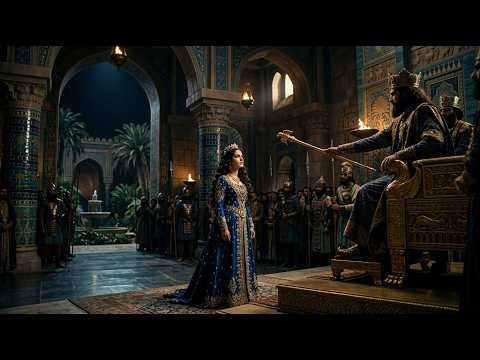
6Estaba decorado con cortinas de algodón blanco y azul atadas con cordones de lino fino e hilo de púrpura sobre anillos de plata, sostenidos por pilares de mármol. Sobre un pavimento de pórfido púrpura, mármol, nácar y piedras costosas se colocaron sofás de oro y plata.

7Las bebidas se servían en copas de oro de diferentes tipos, y el vino real fluía libremente debido a la generosidad del rey.

8El rey había ordenado que no se limitara la cantidad de bebida de los invitados; había dicho a sus servidores que dieran a cada uno lo que quisiera.

9La reina Vasti también preparó un banquete para las mujeres del palacio que pertenecía al rey Jerjes.

10El séptimo día del banquete, el rey, sintiéndose feliz por haber bebido vino, ordenó a los siete eunucos que eran sus asistentes, Mehumán, Bizta, Harbona, Bigta, Abagta, Zetar y Carcas,

11que le trajeran a la reina Vasti con su tocado real, para que pudiera mostrar su belleza al pueblo y a los funcionarios, pues era muy atractiva.

12Pero cuando los eunucos le entregaron la orden del rey, la reina Vastise negó a venir. El rey se enfadó muchísimo; estaba absolutamente furioso.

13Entonces el rey habló con los sabios que sabrían qué hacer, pues era costumbre que pidiera la opinión de expertos en procedimientos y asuntos legales.

14Los más cercanos a él eran Carsena, Setar, Admata, Tarsis, Meres, Marsena, y Memucán. Eran los siete nobles de Persia y Media que se reunían frecuentemente con el rey y ocupaban los más altos cargos del reino.

15“¿Qué dice la ley que debe hacerse con la reina Vasti?” , preguntó. “¡Ella se negó a obedecer la orden directa del rey Jerjes dictada por los eunucos!”

16Memucán dio su respuesta ante el rey y los nobles: “La reina Vasti no sólo ha insultado al rey, sino a todos los nobles y a todo el pueblo de todas las provincias del rey Jerjes.

17Cuando se sepa lo que ha hecho la reina, todas las esposas menospreciarán a sus maridos, los mirarán con desprecio y les dirán: ‘¡El rey Jerjes ordenó que le trajeran a la reina Vasti, pero no vino!’.

18¡Al final del día, las esposas de todos los nobles de toda Persia y de Media que hayan oído lo que hizo la reina, tratarán a sus nobles maridos con airado desprecio!

19“Si le place a Su Majestad, emita un decreto real, de acuerdo con las leyes de Persia y de Media que no pueden ser cambiadas, para que Vasti sea desterrada de la presencia del rey Jerjes, y para que Su Majestad le dé su posición real a otra, una que sea mejor que ella.

20Cuando el decreto de Su Majestad sea proclamado en todo su vasto imperio, todas las esposas respetarán a sus maridos, sean de alta o baja cuna”.

21Este consejo les pareció bien al rey y a los nobles, así que el rey hizo lo que Memucán había dicho.

22Envió cartas a todas las provincias del imperio, en la escritura y la lengua de cada una de ellas, para que cada hombre gobernara su propia casa y utilizara su propia lengua materna.
📖 Chapter study

Summary

The Persian king Ahasuerus hosts a lavish banquet and orders Queen Vashti to appear before everyone to display her beauty. She refuses, and the king, advised by his princes, removes her as queen.

Explanation

The book opens by showing the power and excess of the Persian empire, with a 180-day banquet displaying its riches. Vashti's refusal—likely because she did not want to be put on display like an object before drunken men—results in disproportionate consequences, driven more by the king's wounded pride and his advisors' fear that other women would follow her example of disobedience. It's worth noting that God is not mentioned even once in this chapter, nor anywhere in the entire book of Esther—something unique in the Bible—which already hints at a central theme of the story: God works behind the scenes, even when he seems absent from human decisions.

Fun facts

  • Esther is the only book of the Old Testament that never mentions God's name directly, something that sparked debate among Jewish scholars over whether to include it in the biblical canon, even though its message of divine providence is implicit throughout the story.
  • King Ahasuerus is generally identified by historians as Xerxes I, who ruled the Persian empire between 486 and 465 BC and is also known for his wars against Greece.

Verse-by-verse explanation

  1. Ester 1:1Ahasuerus is identified with the Persian king Xerxes I, whose empire stretched from India even unto Ethiopia, covering a hundred and twenty-seven provinces, one of the largest ever seen up to that time.
  2. Ester 1:2The scene takes place in Shushan, one of the Persian capitals, the same city where decades later Nehemiah would serve as the king’s cupbearer.
  3. Ester 1:3In the third year of his reign, Ahasuerus gathers all the military and political leaders of the empire for a great celebration, probably to plan the military campaign against Greece recorded around this same period.
  4. Ester 1:4King Ahasuerus holds a banquet of a hundred and eighty days just to display the riches of his kingdom to his princes and servants, an extravagance that sets the tone for the Persian court: everything there is done on a gigantic scale, meant to impress. This setting of luxury and power concentrated in a single man is the backdrop for the whole story of Esther.
  5. Ester 1:5After the hundred and eighty days for the elite, the king holds a second feast of seven days, this time open to all the people of the capital, not only the nobles.
  6. Ester 1:6The detailed description of the decorations — fine fabrics, marble pillars, gold and silver furnishings — visually shows the exaggerated luxury of the Persian court even before the story itself begins.
  7. Ester 1:7Each guest drank from a different golden vessel, a detail that reinforces the deliberate extravagance of the celebration.
  8. Ester 1:8Unlike the common custom of forcing guests to drink cup for cup with the host, the king decrees that each man should drink as much as he pleased.
  9. Ester 1:9While the king feasts with the men, Queen Vashti holds her own separate feast for the women of the court, a detail that helps explain the scene of the king’s request that follows.
  10. Ester 1:10On the last day of the feast, already quite drunk, the king sends seven trusted chamberlains to fetch the queen; the wine seems to have directly influenced this decision.
  11. Ester 1:11The king’s request was basically to display the queen’s beauty as one more trophy before all the drunken guests at the feast.
  12. Ester 1:12Queen Vashti refuses to appear before the guests when summoned by the king, and this refusal, small as it may seem today, is treated at court as a political scandal capable of shaking the authority of every husband in the empire. It is this act of refusal that opens the way for the choosing of a new queen later on.
  13. Ester 1:13Instead of deciding alone, the king formally consults his legal advisers, following the Persian custom of treating even personal matters as affairs of state.
  14. Ester 1:14Seven princes of the highest trust, with direct and constant access to the king, make up the council that will decide Vashti’s fate.
  15. Ester 1:15The king’s formal question treats Vashti’s refusal as a legal matter, not an emotional one: what the law requires for this kind of disobedience.
  16. Ester 1:16Memucan exaggerates the seriousness of the case, turning the queen’s personal refusal into a crime against the whole empire, not just against her husband.
  17. Ester 1:17Memucan’s argument is basically about social control: if Vashti’s refusal went unpunished, other women in the empire might feel free to disobey their own husbands.
  18. Ester 1:18Memucan predicts a chain reaction: if the noblewomen hear of the case, marital disrespect could spread quickly through the whole empire.
  19. Ester 1:19The decree against Vashti is recorded “among the laws of the Persians and the Medes,” which, by the custom of that empire, could not be revoked once signed by the king. This rule that a royal law, once sealed, was irreversible comes back decisively later in the story.
  20. Ester 1:20The proposed solution is symbolic and sweeping: an official decree, published throughout the whole vast empire, to publicly reinforce husbands’ authority over their wives.
  21. Ester 1:21The king accepts the suggestion without question, and Memucan’s counsel becomes official decree of the empire, a decision that, unknown to him, will open the way for Esther to enter the story.
  22. Ester 1:22The decree is translated and distributed in every language and script used within the empire, an enormous communication effort just to reinforce male authority at home.

Watch the story of this passage

Videos from our channel that tell what happens in Esther 1.

Chapters

Our apps

Our apps →

Bible in Stories

The Bible told as a story, with audio and videos.

📱 Get the app

World in Stories

True stories of humanity that sound made up.

Feito! Pequenas Vitórias

A light daily routine for people who lose track of the day.