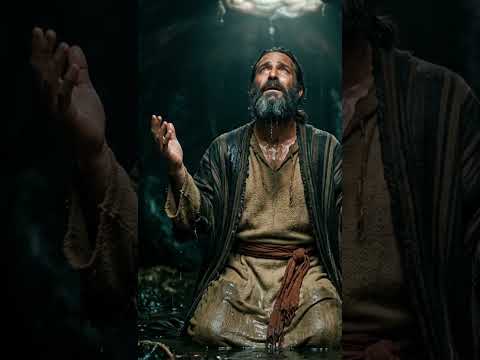
1Entonces Jonás oró al Señor su Dios desde el vientre del pez.
2Comenzó así: “En mi agonía clamé al Señor y él me respondió. Desde las profundidades del Seol supliqué por ayuda, y tú me respondiste.
3Me lanzaste a lo profundo, al fondo del mar. El agua me cubrió por complete, y tus olas poderosas rodaban sobre me.
4Y me dije a mi mismo: ‘El Señor me ha expulsado de su presencia. ¿Podré ver tu santo Templo otra vez?’
5El agua formó un torbellino sobre mi y no podría respirar. Las profundidades me arrastraban, y las algas se enredaban en mi cabeza.
6Me hundí hasta la base de las montañas; la tierra me cerró sus puertas para siempre. Pero tu, mi Señor, mi Dios, me sacaste del abismo.
7“Mientras mi vida se desvanecía, me acordé del Señor, y mi oración llegó a tu santo Templo.
8Los que adoran a los ídolos vanos, renuncian a su confianza en la bondad de Dios.
9Pero yo te ofreceré sacrificios, y gritaré mi gratitud. Guardaré las promesas que te he hecho, porque la salvación viene del Señor”.
10Entonces el Señor mandó al pez a que vomitara a Jonás en la orilla.
📖 Chapter study
Summary
From inside the fish, Jonah prays to God, acknowledging that he was thrown into the sea because of his own disobedience, yet trusting that God would rescue him; in the end, the fish vomits him onto dry land.
Explanation
This poetic prayer, full of psalm-like language, shows Jonah's inner transformation: from utter despair ('I am cast out of thy sight') to renewed confidence ('I will look again toward thy holy temple'). The phrase 'salvation is of the LORD' sums up the whole experience: even in our worst moment of failure and disobedience, salvation remains God's work, not a human achievement. The very obedience of the fish, which 'vomits' Jonah out exactly when and where God determines, stands in ironic contrast to the prophet's disobedience. The lesson for today: sincere repentance, even from rock bottom, always finds God's answer.
Fun facts
- This prayer is structured like a classic Hebrew psalm of praise and thanksgiving, with verse-by-verse parallels to several Psalms (such as 18, 42, and 69), suggesting that Jonah drew on familiar liturgical forms to express his experience.
- Jesus makes direct reference to this episode in Matthew 12:40, comparing Jonah's three days and three nights in the fish to the three days He Himself would spend in the tomb before the resurrection — known as 'the sign of Jonah.'