Jonás 1

VBL · Chapter 1/4

1El Señor le habló a Jonás, el hijo de Amitaí, diciéndole:

2“Ve de inmediato a la gran ciudad de Nínive y condénala porque yo he visto la maldad de su pueblo”.

3Pero Jonás salió y huyó a Tarsis para escaparse del Señor. Entonces se fue a Jope, donde encontró un barco que iba en dirección a Tarsis. Pagó el pasaje y abordó para navegar hacia Tarsis y así escapar del Señor.

4Pero el Señor envió sobre el mar un viento fuerte que creó una tormenta, y amenazaba con destruir el barco.

5Los marineros estaban muy asustados y cada uno oraba a su dios para que los salvara. Tiraron por la borda toda la carga para aliviar el peso del barco. Mientras tanto, Jonás había bajado al interior del barco, donde se había acostado se había quedado dormido.

6El capitán del barco se acercó a Jonás y le preguntó: “¿Cómo es que puedes estar durmiendo? Levántate y ora a tu Dios. Quizás así se dará cuenta de lo que pasa y no nos ahogaremos”.

7Entonces los marineros dijeron entre sí: “Echemos suertes para descubrir quién es el culpable de este desastre que ha venido sobre nosotros”. Así que echaron suertes y salió el nombre de Jonás.

8Entonces le preguntaron: “Dinos quién es el responsable de esta calamidad que estamos sufriendo. ¿A qué te dedicas? ¿De dónde eres? ¿De qué país vienes? ¿Cuál es tu nacionalidad?”

9“Soy hebreo”, respondió Jonás. “Y yo adoro al Señor, al Dios de los cielos, del mar y de la tierra”.

10Los marineros se asustaron mucho más y le preguntaron a Jonás: “¿Qué has hecho?” porque Jonás les explicó que estaba huyendo del Señor.

11“¿Qué podremos hacer contigo para que se calme la tormenta?” le preguntaron, pues la tormenta empeoraba.

12“Tírenme al mar”, respondió Jonás. “Entonces el mar se calmará, porque yo sé que es por mi culpa que están en medio de esta tormenta”.

13Pero los marineros por el contrario trataron de remar y regresar a la orilla, pero no pudieron, porque el mar estaba muy embravecido a causa de la tormenta que se hacía más fuerte.

14Entonces clamaron al Señor: “¡Señor! Por favor, no nos mates por sacrificar la vida de este hombre o por derramar sangre inocente, porque tú, Señor, has permitido que así sea”.

15Así que alzaron a Jonás y lo lanzaron al mar, y entonces el mar se tranquilizó.

16Los marineros se dejaron dominar por el temor. Y le ofrecieron sacrificio, e hicieron muchas promesas al Señor.

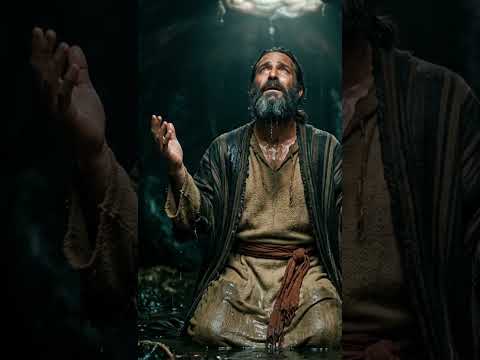
17Entonces el Señor envió a un pez enorme para que se tragara a Jonás. Y Jonás pasó tres días y tres noches en el vientre del pez.

📖 Chapter study

Summary

God commands Jonah to preach in Nineveh, but he flees by ship in the opposite direction. A violent storm threatens the ship, and the sailors discover that Jonah is the cause; thrown into the sea, he is swallowed by a great fish.

Explanation

Nineveh was the capital of the Assyrian Empire, Israel's cruel and feared enemy, which explains Jonah's resistance: preaching there meant offering a chance of repentance to a people he saw as deserving nothing but destruction. His flight to Tarshish (likely at the opposite end of the Mediterranean) shows that one can try to flee from a mission, but not from God's active presence. Interestingly, the pagan sailors show more fear of God and more compassion for Jonah than the prophet himself showed toward the Ninevites. The application for today: prejudices and personal grudges can lead us to resist God's will, especially when it involves extending grace to those we consider unworthy of it.

Fun facts

  • Tarshish is generally identified with a Phoenician colony on the coast of modern-day Spain, which would make Jonah's flight an attempt to reach the farthest known point of the ancient world, in the opposite direction from Nineveh (which lay to the east, in Mesopotamia).
  • The Hebrew phrase used for 'great fish' (dag gadol) is generic and does not specify the species — later traditions (including the Greek translation) popularized the idea of a 'whale,' but the original text makes no such specification.

Verse-by-verse explanation

  1. Jonás 1:1The standard opening of the prophetic books: the word of the Lord comes to Jonah, identified by his father's name, even before he knows what the mission will be.
  2. Jonás 1:2Nineveh was the capital of the Assyrian Empire, Israel's greatest enemy at the time — that's why Jonah doesn't want to go: he isn't afraid of the mission, he doesn't want Israel's enemies to get the chance to repent and escape punishment.
  3. Jonás 1:3Tarshish lay at the opposite end of the map from Nineveh, likely on the coast of modern-day Spain; Jonah doesn't just run away, he literally flees in the opposite direction from where God sent him, as far as possible.
  4. Jonás 1:4As soon as Jonah flees, God sends a storm so violent that the ship, his means of escape, is about to break apart — the escape isn't going to work.
  5. Jonás 1:5A striking contrast: the pagan sailors panic and cry out to their own gods, while Jonah, prophet of the true God, sleeps soundly below deck, oblivious to the crisis.
  6. Jonás 1:6After fearing for their lives, the sailors go down to Jonah, who is asleep, and ask him to cry out to his God too, for the safety of everyone.
  7. Jonás 1:7Casting lots was a common method at the time for discovering the divine will or finding someone guilty; the pagan sailors use this practice and end up landing, ironically, on exactly the right person.
  8. Jonás 1:8After the lot falls on Jonah, the sailors bombard him with questions, trying to understand who this man is who brought the storm.
  9. Jonás 1:9Jonah finally identifies himself, ironically claiming that he 'fears' the Lord right after having fled from Him — his words contradict his own actions.
  10. Jonás 1:10On learning that Jonah was fleeing from the very God who controls the sea, the sailors grow even more terrified, realizing how serious the situation is.
  11. Jonás 1:11With the storm getting worse, the sailors ask Jonah, the admitted culprit, what they need to do to save themselves.
  12. Jonás 1:12Jonah takes responsibility and asks to be thrown into the sea, knowing that's the only way the storm will stop — a gesture that sounds almost suicidal.
  13. Jonás 1:13Before agreeing to throw Jonah overboard, the sailors try everything to row back to land, showing they didn't want to kill anyone without cause.
  14. Jonás 1:14Before acting, the pagan sailors cry out to Jonah's God, asking not to be held guilty for his death — a surprising respect for life, even in the midst of desperation.
  15. Jonás 1:15As soon as they throw Jonah into the sea, the storm stops immediately, confirming that he himself was the cause of the problem.
  16. Jonás 1:16The miracle of the storm stopping leads the pagan sailors to fear and worship the God of Israel — an unexpected conversion in the middle of the story.
  17. Jonás 1:17The 'great fish' is the story's most famous element; the book is a short narrative full of irony, and this detail works within the story as the means God uses to put Jonah back on course, without the text going into zoological detail.

Watch the story of this passage

Videos from our channel that tell what happens in Jonah 1.

Chapters

Our apps

Our apps →

Bible in Stories

The Bible told as a story, with audio and videos.

📱 Get the app

World in Stories

True stories of humanity that sound made up.

Feito! Pequenas Vitórias

A light daily routine for people who lose track of the day.